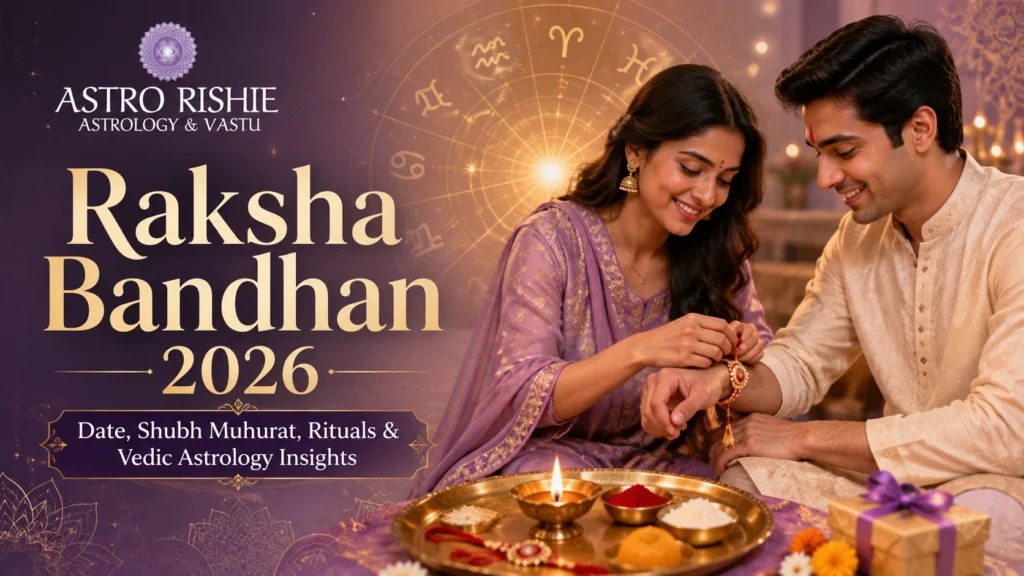
Raksha Bandhan 2026: Date, Shubh Muhurat, Rituals, Significance & Vedic Astrology Insights
Every August, the families in Sydney inquire about one thing: when is the actual time to tie rakhi? The answer lies not just in the date but in more things, including the Bhadra period, the Aparahna period, and the planetary period considered auspicious according to the Vedic scriptures.
In this guide, you’ll find out all you need to know about the Raksha Bandhan date 2026, the significance of the rakhi thread and some astrology bits that no festival piece covers.
Raksha Bandhan 2026: Date and Shubh Muhurat
Raksha Bandhan 2026 falls on Friday, 28 August 2026. The thread ceremony window and Aparahna muhurat are set out below.
| Detail | Timing |
| Raksha Bandhan Date | Friday, 28 August 2026 |
| Thread Ceremony Time | 06:19 AM – 02:18 PM |
| Duration | 07 Hours 58 Minutes |
| Aparahna Muhurat | 01:04 PM – 02:18 PM |
| Aparahna Duration | 01 Hour 13 Minutes |
These timings are calculated for a reference location, so families observing Raksha Bandhan outside that city should check local panchang timings before the ceremony, since auspicious windows shift with time zone and sunrise.
What Is Raksha Bandhan and Why Do We Celebrate It?
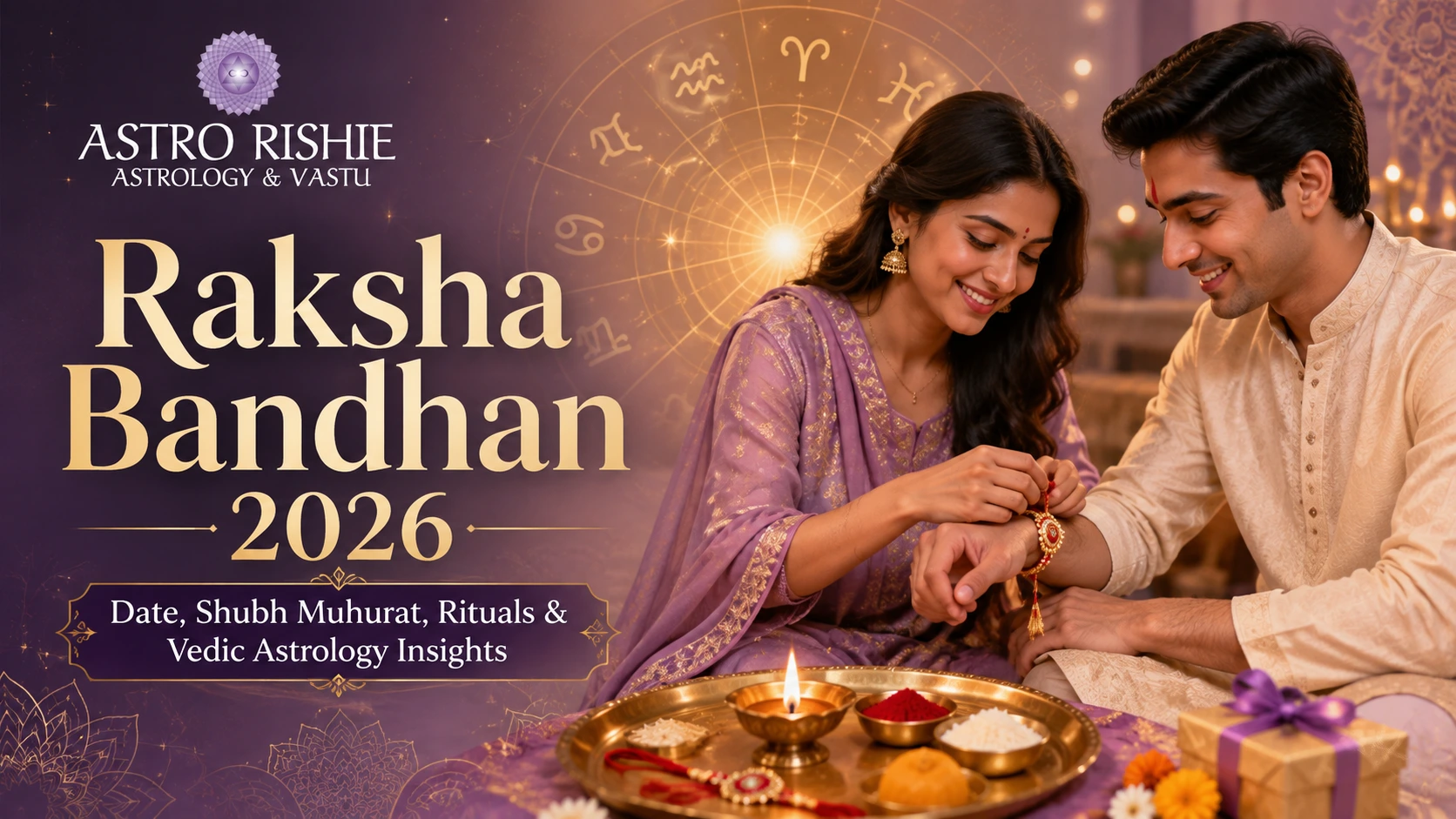
“Raksha Bandhan” translates to “protection tie.” The sister ties the rakhi thread on her brother’s wrist, and he in turn pledges lifelong protection.
The festival is celebrated on the day of Shravana Purnima, which refers to the full moon in the month of Shravan. Very few people know that this is not an accident. Full moon days have always been regarded as spiritually significant days for taking vows.
The Mythology Behind the Sacred Thread
One story often told is of Goddess Lakshmi tying a thread on King Bali’s wrist to protect him, in exchange for his devotion. Another describes Draupadi tying a strip of cloth on Krishna’s wrist after he was injured, a gesture he later repaid many times over.
These stories share one theme: a protective bond formed through a simple thread, not a grand gesture. That’s part of why the ritual has survived for centuries with so little needed beyond sincerity.
Why Bhadra Kaal Matters in Vedic Astrology ?
The Bhadra Kaal is an inauspicious time ruled by the lunar Nakshatra of Vishti, and it is inauspicious to undertake any new venture, including rakhi tying. According to Vedas, this is a time when Vedic muhurat calculations should be avoided, as per the calendar panchang.
This is one aspect of Raksha Bandhan which contemporary occasions overlook. When we are consulted on this topic, we are often asked why the importance of muhurat even matters when the act is symbolic itself. This is because, in Vedic muhurat calculations, timing becomes an intrinsic part of the ritual rather than being superimposed upon it.
Correct Rakhi Tying Method and Puja Vidhi
Puja Samagri (items needed):**
- Rakhi thread
- Roli (vermillion) and akshat (rice grains)
- A small diya (lamp)
- Sweets
- A thali (tray) to hold everything
Step-by-step Puja Vidhi:
- The brother sits facing east or north, considered favourable directions in Vedic tradition.
- The sister applies roli and akshat to his forehead.
- She lights the diya and performs a small aarti.
- The rakhi is tied on the right wrist.
- Sweets are offered, followed by the brother’s gift or promise of protection.
During the tying process, families recite a simple mantra that seeks to ensure the safety and longevity of the brother’s life. If your family belongs to any particular tradition, a family priest or elder could help you frame it correctly.
Common Mistakes to Avoid
- Tying rakhi during Bhadra Kaal without checking local timing
- Skipping the diya and akshat, treating it as just a thread exchange
- Rushing the ceremony without a moment of intention or prayer
- Ignoring the Aparahna window entirely if the morning slot is missed
Vedic Astrology Insights for Siblings
One observation that does not receive much attention: The Moon in signs of both siblings can help determine how Raksha Bandhan’s protective aura is to be channeled that year. The siblings with Moon in sensitive houses should opt for conducting the ritual in a more discreet fashion, as compared to conducting it amidst a bigger crowd.
On the same lines, if any one of the siblings is passing through an adverse planetary phase, such as Saturn’s phase, it is believed that getting a rakhi tied in the Aparahna Muhurat will provide stability to the year to follow.
Celebrating Raksha Bandhan in Australia
Many Indian Australian families balance tradition with practical scheduling across time zones and work commitments.
Video-call siblings overseas for a virtual thread ceremony at the correct muhurat
- Host a small gathering with traditional sweets from local Indian grocers in Sydney, Melbourne or Brisbane
- Combine the celebration with a weekend visit if siblings live in Perth, Adelaide or Canberra
- Choose gifts with meaning: a book, a small piece of jewellery, or a handwritten note works well alongside the traditional shagun
How Astro Rishie Can Help?
Choosing the right muhurat for your family’s specific location and circumstances takes more than a general table. Astro Rishie offers personalised Vedic astrology consultations to confirm your ideal Raksha Bandhan timing, alongside broader guidance on sibling relationships, family harmony and upcoming planetary transits.
Conclusion
Raksha Bandhan 2026 falls on Friday, 28 August, with the Aparahna muhurat running from 01:04 PM to 02:18 PM. Understanding the reasoning behind Bhadra, the puja vidhi and the astrological context around your family’s charts adds real depth to a festival that’s often reduced to just a thread and a gift.
Book a Personalised Muhurat Consultation with Astro Rishie
Frequently Asked Questions
Raksha Bandhan 2026 falls on Friday, 28 August 2026, observed on Shravana Purnima.
The thread ceremony window runs from 06:19 AM to 02:18 PM, with the Aparahna muhurat specifically between 01:04 PM and 02:18 PM.
Bhadra Kaal is a period considered inauspicious in Vedic tradition for starting new ventures, so tying rakhi during this window is generally avoided where the panchang shows an overlap.
Yes, the ritual remains valid outside the muhurat window, though the specific timing is considered to add extra auspiciousness to the ceremony.
Traditionally, rakhi is tied on the brother’s right wrist during the ceremony.
Families often recite a simple invocation for the brother’s protection and long life, and a family priest can provide the exact traditional wording if needed.
Meaningful gifts such as jewellery, books or a handwritten note work well alongside the traditional shagun, with no fixed rule beyond genuine intention
A video call at the correct muhurat, followed by a small local gathering with traditional sweets, is a common way families across Sydney, Melbourne and Brisbane maintain the tradition.