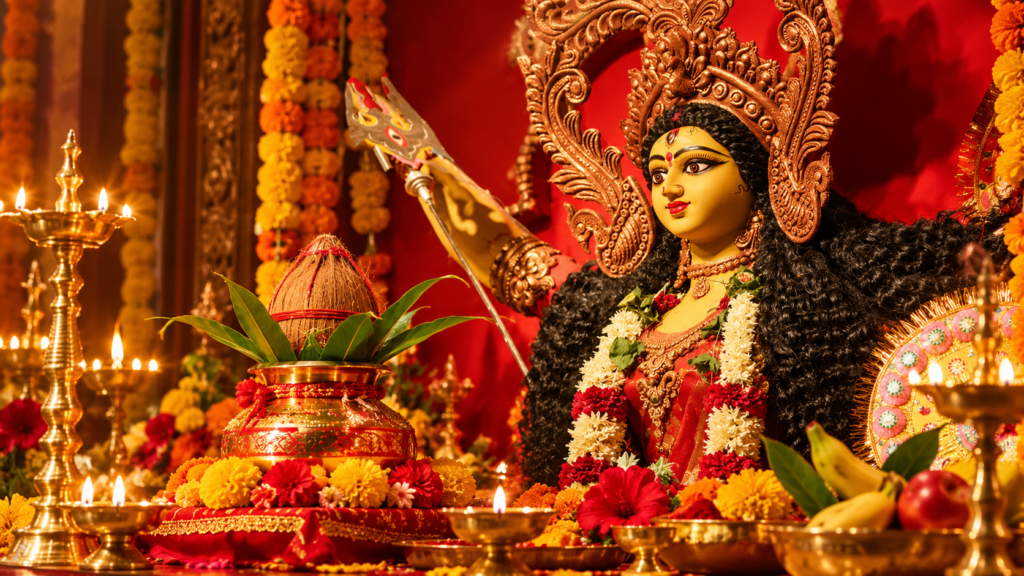
Navratri is one of the most vibrant and spiritually significant festivals in the Hindu calendar, celebrated over nine nights in devotion to Goddess Durga and her nine divine forms. From colourful garba nights to daily puja rituals, the festival blends deep spirituality with joyous celebration.
For many devotees, Navratri is more than a cultural event. Each day carries specific rituals, colours, and offerings believed to invite strength, prosperity, and positive transformation into one’s life.
This guide walks through the meaning of Navratri, the puja rituals observed across the nine nights, and the benefits devotees seek through dedicated worship.
What Is Navratri and Why Is It Celebrated?
Navratri, meaning “nine nights,” honours Goddess Durga’s triumph over the demon Mahishasura, symbolising the victory of good over evil. Each of the nine nights is dedicated to a different form of the goddess, collectively known as Navadurga.
The festival is observed with fasting, prayer, dance, and community gatherings, culminating in Dussehra, which marks the goddess’s ultimate victory.
The Nine Forms of Goddess Durga
Each night of Navratri honours a specific manifestation of the goddess:
- Shailaputri – Daughter of the mountains, symbolising strength
- Brahmacharini – Represents penance and devotion
- Chandraghanta – Symbolises courage and grace
- Kushmanda – Associated with creative energy
- Skandamata – Represents maternal love and protection
- Katyayani – Symbolises warrior energy and justice
- Kalaratri – Represents the destruction of ignorance
- Mahagauri – Symbolises purity and peace
- Siddhidatri – Represents spiritual accomplishment
Devotees often align daily prayers and offerings with the qualities each form represents.
Navratri Puja Rituals: Day-by-Day Practices
Ghatasthapana (Kalash Sthapana)
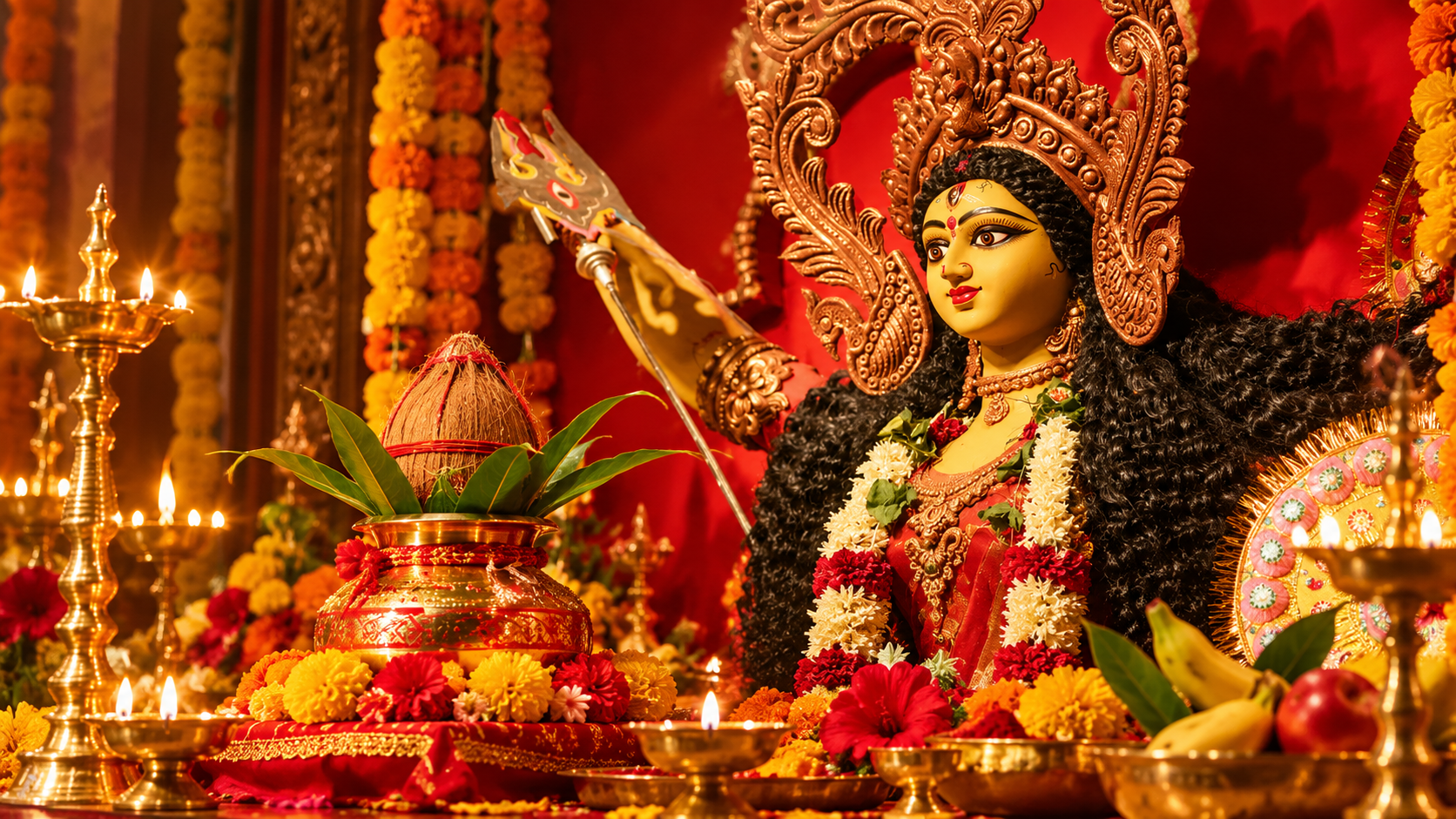
Navratri typically begins with Ghatasthapana, where a sacred kalash is installed, symbolising the invocation of divine energy into the home.
Daily Puja and Aarti
Each day includes morning and evening aarti, offering of flowers, incense, and diyas, along with recitation of Durga Saptashati or Durga Chalisa.
Fasting (Vrat)
Many devotees observe fasting throughout the nine days, consuming fruits, milk, or specific vrat-friendly foods as an act of devotion and discipline.
Kanya Pujan
Towards the end of Navratri, young girls are worshipped as living forms of the goddess, offered food and gifts as part of Kanya Pujan, typically performed on Ashtami or Navami.
Garba and Dandiya Nights
In many regions, evenings include garba and dandiya raas, joyous dance forms performed in devotion, particularly popular during Gujarati Navratri celebrations.
Benefits of Observing Navratri Puja
Spiritual Growth and Discipline
Fasting and daily prayer throughout Navratri encourage discipline, mindfulness, and a deeper spiritual connection.
Removal of Negative Energy
Devotees believe consistent puja and devotion during this period help clear negative energy from the home and mind.
Strength and Courage
Worshipping the warrior forms of the goddess, such as Katyayani and Kalaratri, is believed to inspire inner strength during challenging times.
Family and Community Bonding
Navratri celebrations, from daily puja to garba nights, bring families and communities together, strengthening social and cultural connections.
Renewed Positivity and Fresh Beginnings
As Navratri concludes with the goddess’s victory over evil, many devotees view this period as an opportunity for personal renewal and positive change.
Tips for Meaningful Navratri Observance
- Set up a clean, dedicated puja space before Ghatasthapana.
- Follow fasting guidelines that suit your health and lifestyle.
- Involve family members in daily aarti and rituals.
- Reflect on the qualities of each goddess form throughout the nine days.
- Approach the festival with genuine devotion rather than ritual alone.
Seeking Personalised Guidance for Navratri Puja?
Every devotee’s spiritual journey is unique. Personalised guidance on puja timings, rituals, and how Navratri aligns with your personal astrological chart can deepen the meaning of your celebration.
Connect with Astro Rishie for personalised consultations on Navratri rituals, puja timings, and festival guidance tailored to your needs.
Frequently Asked Questions
What is Navratri and why is it celebrated?
Navratri celebrates Goddess Durga’s victory over the demon Mahishasura, symbolising the triumph of good over evil across nine nights of devotion.
What are the main puja rituals during Navratri?
Key rituals include Ghatasthapana, daily aarti, fasting, recitation of Durga Saptashati, and Kanya Pujan toward the end of the festival.
What are the benefits of observing Navratri fasting?
Fasting is believed to support spiritual discipline, mental clarity, and a deeper connection to the divine during the nine-day observance.
Who are the nine forms of Goddess Durga worshipped during Navratri?
The nine forms are Shailaputri, Brahmacharini, Chandraghanta, Kushmanda, Skandamata, Katyayani, Kalaratri, Mahagauri, and Siddhidatri.
What is Kanya Pujan and when is it performed?
Kanya Pujan involves worshipping young girls as forms of the goddess, typically performed on Ashtami or Navami with offerings of food and gifts.
Why is Ghatasthapana performed at the start of Navratri?
Ghatasthapana involves installing a sacred kalash to invoke divine energy into the home at the beginning of the nine-day celebration.
Can Navratri rituals be personalised based on individual astrology?
Yes, consulting an astrologer can help align puja timings and rituals with your personal chart for a more meaningful observance.