The first thing which both families would seek when they decide to have discussion regarding marriage is the kundli. And not because of superstitious beliefs, but because of the true fact that sometimes compatibility lies much deeper than just having common personalities and interests.
The practice of matching kundlis, also known as kundali milan or guna milan, is the method of comparing the birth charts of two people and checking whether the two of them are compatible enough to build a good future together. This compatibility is analyzed in relation to temperament, compatibility emotionally and physically, financially and so on, based on planetary positions and astrological aspects of their births.
Here is an overview of this process and meaning of some of the numbers involved.
The Foundation – What Is a Kundli?
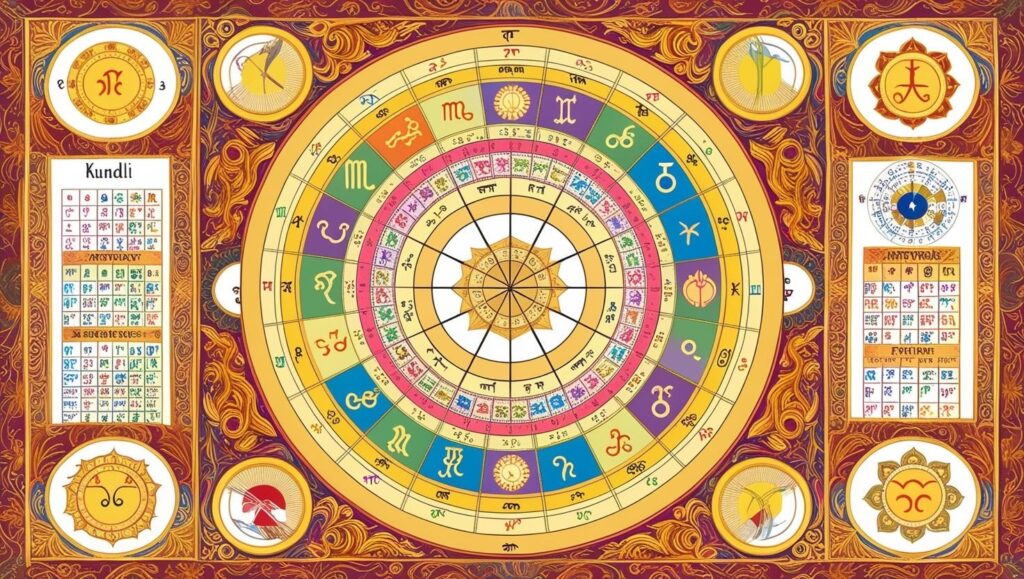
A kundli is basically the map of the sky that represents the positions of the sun, moon, and the planets in 12 zodiac signs and 12 houses at the time you were born. The Moon sign or Rashi and the ascendant or Lagna have special significance in the Vedic astrology system, which determine one’s way of thinking and acting in life.
Two matching kundlis are analyzed by an astrologer in terms of their similarities and differences.
The kundli, which can be called horoscope or birth chart, is a diagram that illustrates the position of the Sun, the Moon, and other planets at the time of your birth according to the 12 houses and the 12 zodiac signs. The sign of the Moon (Rashi) and the Ascendant (Lagna) in Vedic Astrology have special importance as they influence how one feels, acts, and reacts to different situations.
Comparing two kundlis means analyzing these positions of planets to find out the similarities and discrepancies.
The 36-Point System – Ashtakoota Milan
The commonly adopted technique for Kundali Matching in North Indian Vedic Astrology is known as Ashtakoota Milan, which is a technique based on eight different categories (Kootas), with each being allotted an upper score limit. The sum of all eight equals 36.
Here’s what each Koota examines:
| Koota | What It Assesses | Max Points |
| Varna | Spiritual compatibility and ego levels | 1 |
| Vashya | Mutual influence and control in the relationship | 2 |
| Tara | Birth star compatibility and health | 3 |
| Yoni | Physical and intimate compatibility | 4 |
| Graha Maitri | Mental compatibility and friendship between Moon signs | 5 |
| Gana | Temperament match (Deva, Manushya, Rakshasa) | 6 |
| Rashi (Bhakut) | Emotional and financial harmony | 7 |
| Nadi | Health compatibility and progeny | 8 |
Total: 36 points
A score of 18 or above is generally considered acceptable for marriage. Scores of 24 and above are considered good. Anything above 28 is seen as an excellent match.
That said, numbers alone don’t tell the full story – and a good astrologer will always look beyond the score.
Why the Score Isn’t Everything ?
The Ashtakoota system is a starting framework, not a verdict. Two people can score 28 and still face significant challenges if there are deeper planetary conflicts in their charts. Equally, a couple scoring 20 may have outstanding compatibility once the full charts are examined.
There are specific conditions that a Vedic astrologer will always check separately:
Mangal Dosha (Mars Affliction): If Mars is placed in certain houses in a person’s chart (1st, 2nd, 4th, 7th, 8th, or 12th, depending on the tradition), they are considered “Manglik.” This is one of the most talked-about factors in kundli matching, and it does require careful consideration- but it is also frequently misunderstood. Many Mangal Doshas are cancelled by other planetary placements, and a qualified astrologer will assess this properly rather than issuing a blanket warning.
Nadi Dosha: This is the highest-weighted Koota (8 points) for a reason. When both partners share the same Nadi (Adi, Madhya, or Antya), it scores zero and is considered a significant mismatch – particularly in relation to health and children. Like Mangal Dosha, there are exceptions and remedies, but this is never something to overlook.
Dasha Compatibility: Beyond the Kootas, an experienced astrologer will look at the current and upcoming planetary periods (Mahadashas and Antardashas) of both individuals. A marriage during a challenging Dasha period for either partner deserves careful timing and preparation.
South Indian Kundli Matching – A Different Approach
In South India, the primary method is Dashakoot Milan (ten-factor matching) or a system focused on Nakshatra compatibility between the bride and groom’s birth stars. The Nakshatras are checked in a specific sequence – for health, longevity, mutual growth, and children – using a different scoring framework.
The principles are the same but the structure differs. If your family follows South Indian traditions, it’s important to work with an astrologer familiar with that system.
What Kundli Matching Is – and Isn’t ?
Let’s be clear: kundli matching is a method of introspection and self-awareness; it is neither a certainty nor a disqualification. It helps you see the areas where the pair will have to put in extra effort, speak up and brace themselves for particular life stages that lay ahead.
There are many happy couples who have not done well in their kundli matching process. There are also couples who score very high but yet find it tough going. All kundli matching does is give you an additional perspective – one conversation starter among many others.
Ultimately, it gives both the individuals and their respective families an open eye and some sort of an understanding of what lies ahead in their married life.
Getting a Kundli Matching Done
In order to draw up and analyze two kundalis accurately, you will require the birth date, time, and location of both the individuals. The birth time is of particular significance, as even a difference of just 15 minutes might have drastic differences in terms of the Ascendant and the house positions.
Should you be thinking about using kundli matching as a method of evaluating your prospects before getting into a committed relationship, you could always avail yourself of the expertise of Astro Rishie by going in for a complete Kundali Milan session.
Marriage is one of the most important decisions in life. Kundli matching does not decide this for you but provides an important element – perspective from a system that has been working for centuries.
Ready to Know What Your Kundli Really Says About Your Relationship?
A Guna Milan score is only one part of the picture. A detailed kundli matching reveals emotional compatibility, relationship strengths, potential challenges, Mangal Dosha, Nadi Dosha, Dasha compatibility, and much more before you take the next step.
At Astro Rishie, every Kundli Matching consultation is performed using authentic Vedic astrology, with practical guidance tailored to your unique birth charts- not just a score out of 36.
Book your personalized Kundli Matching consultation today and gain the clarity you deserve before saying yes.
Speak with Astro Rishie Now
Frequently Asked Questions (FAQs)
Kundli Matching, also known as Kundali Milan or Guna Milan, is a Vedic astrology process that compares the birth charts of two individuals to assess compatibility for marriage. It evaluates emotional, mental, physical, financial, and family harmony.
The Ashtakoota system has a maximum score of 36 points.
18 or above is generally considered acceptable.
24 or above indicates good compatibility.
28 or above is considered an excellent match.
However, astrologers also analyse planetary positions beyond the score.
Yes. A lower score does not automatically mean a marriage will fail. Factors such as planetary strengths, Dasha compatibility, Yogas, and Dosha cancellations can significantly influence overall compatibility.
Not necessarily. While Mangal Dosha is an important consideration, many charts contain cancellations or balancing planetary combinations. A qualified Vedic astrologer should evaluate the complete chart before reaching any conclusions.
Nadi Dosha occurs when both individuals belong to the same Nadi category. It is considered one of the most important factors in Kundli Matching because it relates to health, family life, and progeny. However, certain astrological combinations can reduce or cancel its effects.
To perform an accurate Kundli Matching, you’ll need:
Date of birth
Exact time of birth
Place of birth
Accurate birth time helps determine the Ascendant and planetary house placements correctly.